 earlymedical
8.13. Sleep Worksheet
Each tactical module includes a printable worksheet designed to help you personalize the content and transform it into an actionable plan for longevity. Begin building your first tactical plan now.
BUILD YOUR TACTICAL PLAN
Each tactics module will conclude with you building a personalized plan that takes into account your specific goals and risks. Learn here about the factors that impact sleep quality and create a plan for improvement.
RESOURCES
STEP 1 – ASSESS
SURVEYS & QUESTIONNAIRES
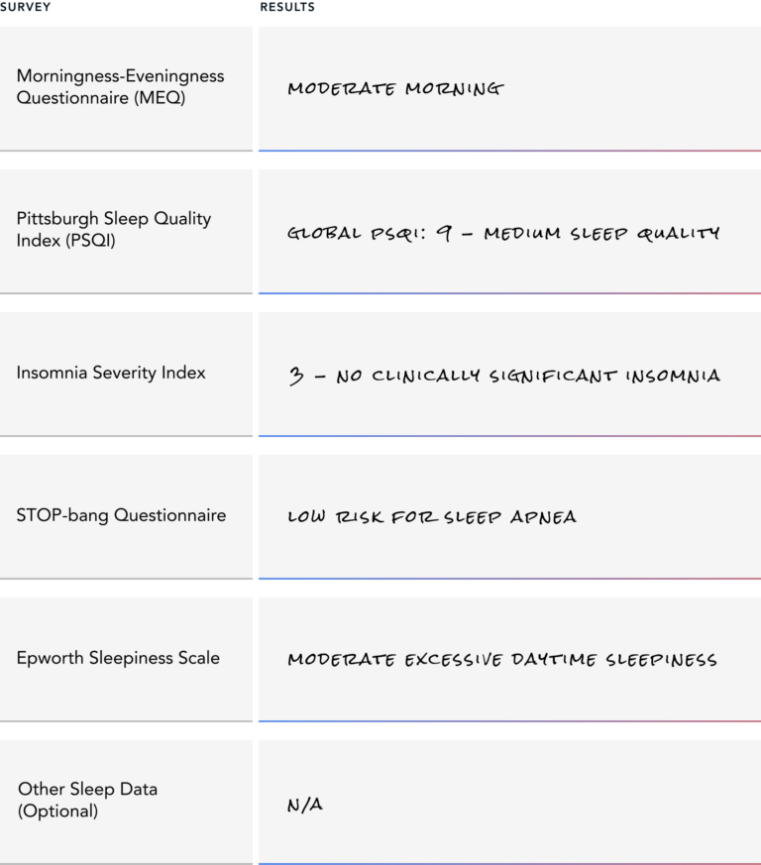
To assess your current sleep quality, quantity, regularity, and timing (QQRT), start by completing the surveys and questionnaires below. As you complete each survey, record your results under Step 1: Assess on the worksheet.
Sleep Traits
-
Scoring note: Per Matt Walker, a score >5 on the PSQI indicates there is a potential issue to work through. Consider this as another tool for helping you get a relative sense of where you should focus your efforts.
Sleep Disorders / Disease Risk
Example
SELF-ASSEMENT
Once you have completed all surveys, think back to the factors that affect sleep quality from Lessons 7.3-7.11.
The goal for this exercise is to simply identify the areas of your sleep routine that need improvement. Which factors do you need to focus on? Which need immediate attention? For each factor, mark the column that best describes your current sleep habits.
Example

STEP 2 – PLAN
Now that you have a better sense of what’s affecting your sleep, it’s time to create your plan. Review your sleep factor chart from Step 1 and answer the questions under Step 2: Plan on the worksheet.
Example

STEP 3 – TRACK
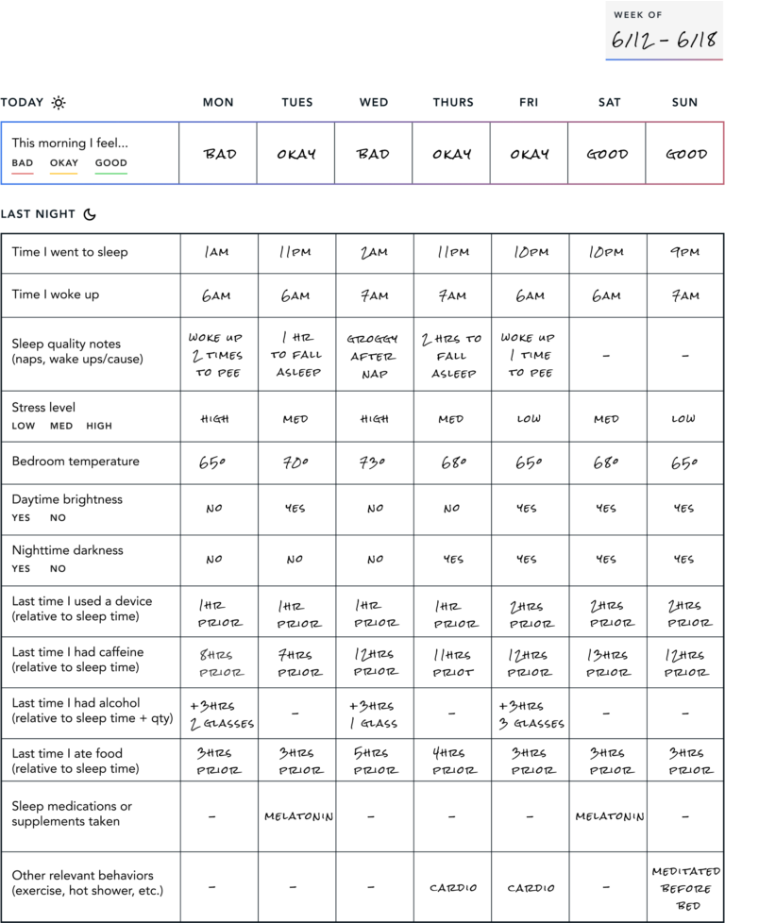
Using the plan from Step 2 as your guide, implement the changes you outlined and track your sleep routine for 30 days. Every morning, use the weekly spread under Step 3: Track to write how you feel when you wake up. Then, record the previous night’s sleep. How did your sleep routine contribute to how you feel today?
Make your “Bad, Okay, Good” assessment based upon the following criteria:
-
How hard was it to get out of bed?
-
How long did it take until you felt fully awake?
-
How rested did you feel?
-
How did you perform on sleep-related outcomes (physical, cognitive, distress tolerance, etc)?
Example
Reflect
Once you’ve recorded 30 days of sleep, take a moment to reflect on how this new knowledge has impacted your overall sleep quality. Answer the following questions under Reflect in the worksheet.
What have I found to be the most impactful interventions for creating good or bad sleep outcomes? What will I do over the next 30 day period to achieve better outcomes?
Take a moment to look back on your Longevity Risk Assessment (LRA) from Module 3. What impact does your improved sleep quality have on your health risks?
UPDATE YOUR RESULTS
The key to being early is to take what you’ve learned and apply it consistently. Now that you know what good sleep means to you, make it a goal to keep these habits up. Then, choose a date and consistent time interval to revisit this exercise. It could be one week, month, or year from now, but set a reminder to download the Sleep Worksheet and reassess your sleep.